Every ML model is a compression of its training dataset. The patterns it learns, the biases it carries, and the errors it makes in production all trace back to the data it was trained on. Building or selecting the right dataset is not a preprocessing step — it is a fundamental design decision that determines the ceiling of model performance.
This guide explains what an ML dataset is, how it is structured, how the training/validation/test split works, what makes a dataset high quality, and the most common dataset mistakes that cost teams months of debugging. Whether you are building a dataset from scratch, using a public benchmark, or evaluating an outsourced annotation project, the same principles apply.
What Is a Machine Learning Dataset
A machine learning dataset is a structured collection of data used to train, validate, or evaluate an ML model. Each entry in the dataset is called an example or a sample. Each sample consists of one or more features — the input variables the model learns from — and, in supervised learning, a label or target — the correct output the model should produce for that input.

The dataset is the model’s entire experience of the world during training. It can only learn patterns that exist in the data it has seen. A model asked to classify a type of object it was never shown during training will fail. A model trained on data that is systematically different from the production distribution will fail in production even if it performs well during evaluation. These failures are dataset problems, not algorithm problems.
Components of an ML Dataset
Features
Features are the input variables the model uses to make predictions. A feature can be a column in a table (age, income, product category), a pixel value in an image, a token in a text sequence, or a frame in a video. Feature selection and engineering — deciding which signals to include, how to transform them, and how to handle missing values — is one of the highest-leverage activities in the ML workflow.
Labels and targets
In supervised learning, each sample carries a label: the correct answer for that example. For a classification task, the label is a category. For regression, it is a numerical value. For object detection, it is a set of bounding boxes with class assignments. Labels are produced through data annotation — the process of having human annotators or automated systems assign ground truth to raw data.
Label quality directly limits model accuracy. A model cannot learn to produce correct outputs if the training labels are inconsistent or wrong. Inter-annotator agreement monitoring during annotation is the standard quality gate for label accuracy.
Metadata
Dataset metadata describes the data rather than being part of the training input. Collection date, data source, annotator information, class distribution, known biases, and licensing terms are all metadata. Well-documented metadata is essential for debugging model failures, updating datasets over time, and meeting regulatory requirements in sensitive domains.
Training, Validation, and Test Sets
A single dataset is split into three non-overlapping subsets before model training. Each subset plays a distinct role, and using one for the wrong purpose introduces evaluation errors that produce overconfident model assessments.
| Split | Role | When Used | Typical Size |
|---|---|---|---|
| Training set | The model trains on this data — adjusts weights to minimise error | During training, every epoch | 70–80% of dataset |
| Validation set | Tunes hyperparameters; tracks overfitting during training | After each training epoch; during model selection | 10–20% of dataset |
| Test set | Final unbiased performance evaluation — never seen during training or tuning | Once, at the end of the project | 10% of dataset |
The test set must remain completely unseen until final evaluation. Using the test set to guide any decisions — including architecture choice, feature selection, or hyperparameter tuning — inflates performance estimates and produces models that generalise worse than the metrics suggest. This is one of the most common and most damaging mistakes in ML evaluation practice.
A common starting split is 80% training, 10% validation, and 10% test. The right ratio depends on dataset size: with small datasets (fewer than 10,000 samples), more data in training reduces underfitting risk; with very large datasets, validation and test sets need only enough samples for statistical significance, and the majority should go to training.
For small datasets, k-fold cross-validation is an alternative to a fixed validation split. The dataset is divided into k equal folds; the model trains on k-1 folds and validates on the remaining fold, rotating through all combinations. This uses the available data more efficiently while still providing a reliable performance estimate.
Types of ML Datasets
| Dataset Type | Description | Typical Use | Example |
|---|---|---|---|
| Tabular / structured | Rows and columns with defined schema | Classification, regression, ranking | Customer churn table, credit applications |
| Image dataset | Collections of annotated images | Object detection, classification, segmentation | ImageNet, COCO, medical X-ray sets |
| Text / NLP dataset | Text with labels, spans, or pairings | Sentiment, NER, QA, translation | SQuAD, GLUE benchmark, IMDb reviews |
| Audio dataset | Waveform data with transcripts or labels | Speech recognition, emotion detection | LibriSpeech, Common Voice |
| Video dataset | Annotated video clips or frames | Action recognition, tracking, surveillance | Kinetics, ActivityNet |
| Time-series dataset | Sequenced numerical data with timestamps | Forecasting, anomaly detection | Stock prices, IoT sensor logs |
| Multimodal dataset | Multiple data types per sample | VQA, image captioning, cross-modal retrieval | MS-COCO (images + captions) |
Labelled vs Unlabelled Datasets
Labelled datasets have a ground truth output assigned to each sample — they are the input for supervised learning. Producing labels requires annotation: human annotators, automated labelling, or a hybrid of both. Labelling is the primary cost of building a supervised training dataset, accounting for up to 80% of data-related work time for ML practitioners.
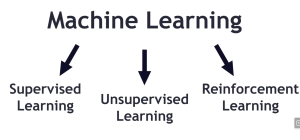
Unlabelled datasets have no assigned output. They are used for unsupervised learning (clustering, dimensionality reduction, anomaly detection) or as the large unlabelled component in semi-supervised learning, where a small labelled set bootstraps learning on a much larger pool of unlabelled data.
Self-supervised learning — the training paradigm behind large language models and vision foundation models — creates its own labels from the structure of the unlabelled data (predicting the next token, reconstructing masked patches). Self-supervised pre-training on large unlabelled datasets followed by fine-tuning on a smaller labelled set has become the dominant paradigm for state-of-the-art models in NLP and computer vision.
What Makes a High-Quality ML Dataset
Dataset quality is the primary determinant of model performance outside of architecture. Four properties determine quality:
| Quality Property | What It Means | How to Verify |
|---|---|---|
| Accuracy | Labels and features reflect ground truth without systematic errors | Inter-annotator agreement; gold standard spot-checks |
| Completeness | No critical features or class segments missing from the dataset | Class distribution analysis; coverage audit against production distribution |
| Consistency | Same annotation standard applied uniformly across all samples | Kappa / IoU tracking across annotators and time |
| Representativeness | Dataset reflects the full distribution of inputs the model will encounter in production | Compare dataset demographics and scenarios against expected production distribution |
| Balance | Class frequencies do not distort training in ways not representative of the real problem | Check class counts; apply stratified sampling or class weighting if needed |
The most dangerous dataset quality problem is distributional mismatch: the training data distribution is systematically different from the production data distribution. A fraud detection model trained on 2022 transaction patterns may perform poorly on 2026 transaction patterns not because the algorithm is wrong, but because the data the model learned from no longer reflects what it will see.
Dataset Size: How Much Data Does an ML Model Need
There is no universal answer. Required dataset size depends on task complexity, number of classes, variance in the input data, and target model performance. Three practical principles hold across most tasks.
More classes require more data per class. A 2-class classifier can reach acceptable performance with a few thousand samples per class for simple tasks. A 1,000-class classifier needs substantially more, because the model must learn to distinguish many more decision boundaries.
More variance in the data requires more samples. A model that needs to generalise across multiple lighting conditions, viewpoints, accents, or demographic groups needs examples of each in the training set. Narrow training distributions produce narrow models that fail at the edges of the distribution.
Simpler architectures need less data. A logistic regression on structured tabular features can generalise from thousands of samples. A large vision transformer may need millions of images to train from scratch. Transfer learning — starting from a pre-trained foundation model and fine-tuning on a smaller task-specific dataset — is the standard approach when labelled data is limited.
Common Dataset Mistakes
Data leakage: information from the future or from the test set enters the training set. Random splitting of time-series data is the most common cause. The result is a model that looks accurate on evaluation but fails in production. Chronological splits and strict separation of the test set from all preprocessing decisions prevent this.
Class imbalance without handling: when one class has far fewer examples than others, the model learns to ignore the minority class — which is often the class that matters most (fraud, rare diseases, defects). Stratified sampling, class weighting, or oversampling techniques address imbalance before training.
Label noise without audit: annotation errors that are not caught during quality review become errors the model learns from. A 10% label error rate on a balanced dataset can degrade model accuracy far more than 10% would suggest, because the errors are not random — they tend to cluster at the decision boundary where the model needs the clearest signal.
Static datasets for dynamic problems: a dataset collected once and never updated will drift from the production distribution over time. Scheduled dataset refresh cycles, distribution monitoring, and alerting on feature drift are necessary for models that need to stay accurate as the world changes.
Frequently Asked Questions
What is the difference between a training set and a test set?
The training set is the data the model learns from — it adjusts its weights to minimise error on these examples. The test set is held back entirely and used only at the end of the project to produce an unbiased estimate of how the model will perform on new data. Using the test set for any decision during the project — including architecture or hyperparameter choices — contaminates it and inflates performance estimates.
What is the difference between a validation set and a test set?
The validation set is used during training to tune hyperparameters and monitor for overfitting. It is consulted repeatedly during the development process. The test set is used once, at the very end, for final evaluation. Reusing the validation set as the test set — or making decisions based on test set results — causes the reported performance to overestimate the model’s actual generalisation ability.
How do I split my dataset into training, validation, and test sets?
A common starting point is 80% training, 10% validation, and 10% test. Adjust based on dataset size — large datasets can afford smaller validation and test fractions; small datasets may benefit from k-fold cross-validation instead of a fixed split. Always shuffle before splitting for classification tasks, and use stratified sampling to ensure class proportions are consistent across all three sets.
What is data leakage in a machine learning dataset?
Data leakage occurs when information from outside the training window — including from the test set, from the future, or from features derived from the target variable — enters the training set. It produces models that appear highly accurate during evaluation but fail in production because they relied on information that would not be available at inference time. Chronological splits for time-series data and strict test set isolation are the primary preventions.
How do you handle class imbalance in a dataset?
Class imbalance — where one class has far fewer samples than others — can be addressed at the data level (oversampling the minority class, undersampling the majority, or generating synthetic samples with SMOTE), at the algorithm level (adjusting class weights in the loss function), or at the evaluation level (using precision-recall or F1 instead of accuracy as the primary metric). The right approach depends on the severity of imbalance and the cost of false negatives versus false positives.
What is dataset bias and how does it affect ML models?
Dataset bias occurs when the training data does not represent the full range of inputs the model will encounter, or when it reflects historical human judgements that are themselves biased. A model trained on biased data will reproduce and amplify that bias in its predictions. Identifying bias requires auditing the dataset’s demographic distribution, examining class frequencies, and testing model performance disaggregated by subgroup — not just reporting aggregate accuracy.